
Photographs: Sahil Salvi
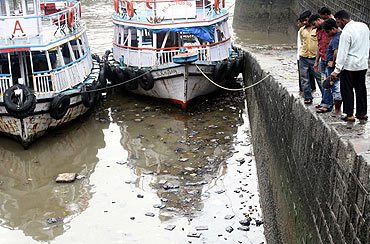
The recent oil spill in Mumbai has worried authorities and environmentalists alike. Rediff.com tells you why oil spills occur and the likely risks of such an environmental nightmare.
What is an oil spill?
An oil spill is the accidental or intentional release of liquid petroleum into the environment, often a water body, and is considered a major form of pollution.
Why do oil spills happen?
Oil spills can happen due to a variety of reasons. Crude oil and refined petroleum can be discharged into the ocean or the sea by sinking oil tankers, malfunctioning offshore platforms, leaking drilling rigs and wells. Mishaps involving oil tankers are the most common reasons of an oil spill.
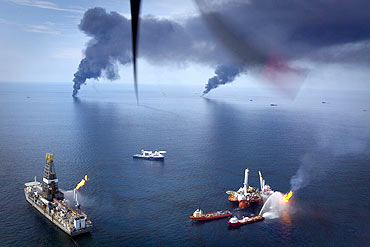
The Gulf of Mexico oil spill, which has dominated headlines since April, is the largest oil spill in history.
The spill was caused by an explosion at a drilling rig owned by BP, and 4.9 million barrels of oil was spilled into the sea. The leak was finally plugged on July 15, after months of brainstorming by scientists, environmentalists and officials.
...
An oil spill and its consequences
Photographs: Sahil Salvi
Why does the oil spread?
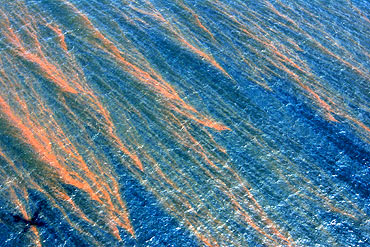
After a petroleum leak, the oil spreads on the surface of the sea really fast due to the currents and the wind.
Only one gallon of oil can result in an oil slick measuring two acres. Another result of an oil leak is that when oil mixes with water, it changes composition and becomes stickier, clinging on to other substances it comes in contact with.
How did the Mumbai oil spill occur?
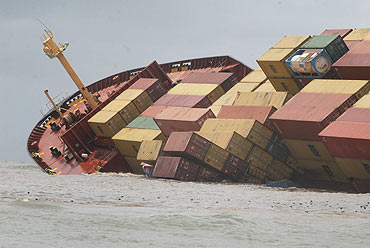
On Saturday morning, MSC Chitra, the outbound merchant vessel from Jawaharlal Nehru Port, collided with MV Khalijia-III when the latter was sailing towards the Mumbai Port Trust for berthing.
MSC Chitra tilted due to the impact of the collision and started sinking. The ship has tilted 80 degrees and the total oil spill is nearly 50 tonnes, according to the authorities.
An oil spill and its consequences
Photographs: Lee Celano/Reuters
How does an oil spill affect marine animals?
An oil spill has the most devastating effect on marine animals. The oil forms a layer on the bodies of fishes and seals, hampering their ability to insulate themselves and leading to fluctuations in their body temperatures.
While some marine animals die due to hypothermia, others ingest the oil and are killed due to dehydration. The oil also covers the surface of the water body and blocks the sunlight from permeating the sea levels and reaching underwater fauna, hampering their growth.
Sea birds also meet a similar tragic end after an oil spill. The sticky oil covers their feathers and when the birds try to clean themselves, they end up ingesting the oil and suffering from poisoning.
Though the oil does evaporate or dissipate finally, some residue will be left behind on the flood of the ocean and it will continue to affect wildlife.
An oil spill and its consequences
Photographs: Lee Celano/Reuters
How does it affect you?
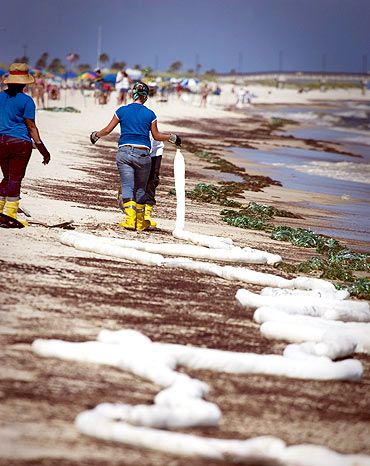
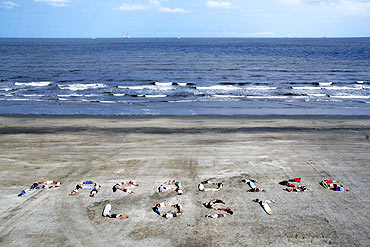
Though an oil spill doesn't affect humans directly, it has many indirect consequences. The Gulf of Mexico oil spill has damaged many beaches. Dead marine animals washed up on these shores and the sandy beaches were clogged by the sticky oil.
An oil spill spells doom for fishermen, who lose their cherished fishing zones to the massive pollution.
Seafood lovers in Mumbai may also have to abstain from their cherished food for some time as supply will decrease further with oil polluting the sea water.
Hotel owners serving seafood as specialty anticipate a shoot up in prices due to the short supply of edible aquatic animals, which already hits a low in monsoonAn oil spill and its consequences
Photographs: Reuters
How can an oil spill be cleaned up?
Clean up depends on a number of factors including the type of oil leaked, the number and of beaches and shorelines along the affected area and the temperature of the water.
The clean up can be done by bioremediation -- using microorganisms to break down or remove oil. Controlled burning is also used to lower the levels of oil in the water, but it can cause air pollution.
Dispersants, which act like detergents, are also used to wash away the oil. But the dispersed oil permeates further into the sea and sometimes worsens matters. Dredging, vacuuming and skimming are other popular ways of clearing up the waters.
Solidifiers, which change the liquid oil to a semi-solid material, are also used to clean the waters.
An oil spill and its consequences
Photographs: Sean Gardnerr/Reuters
Is the cleaning up dangerous for those involved?
The task can be dangerous to the people involved in the cleaning up, who have to lug around the heavy equipment used in the process and face the risks of carrying out such a complicated operation at sea. The oil fumes are also capable of knocking people unconscious.
In a freak accident related to the Mumbai oil spill, a constable attached with the marine unit of the city police died on Monday morning after he fell off a speed boat during patrolling near the cargo vessel MSC Chitra.

article