

Let's go back in time to see how it all began.
When was the first legal claim made over the Babri Masjid?
The first suit in the matter was filed on January 19, 1885.
It sought to gain the right over the chabootra (raised platform) for the plaintiff, Raghubar Das.
Click on NEXT to read further...
Das then appealed to Faizabad's district judge, Colonel J E A Chambier, who, after a spot inspection on March 17, 1886, dismissed the appeal on the same grounds.
The Englishman also struck down the part of the sub-judge's verdict which conceded the property to Das.
Judge Chambier ruled: 'I found that the masjid built by Emperor Babar stands on the border of the town of Ayodhya... It is most unfortunate that a masjid should have been built on the land specially held sacred by the Hindus. But as it occurred 356 years ago, it is too late now to remedy the grievance. All that can be done is to maintain the parties in status quo.'
He went on to observe: 'This chabootra is said to indicate the birthplace of Ram Chander... A wall pierced here and there with a railing hides the platform of the masjid from the enclosure in which stands the chabootra.'
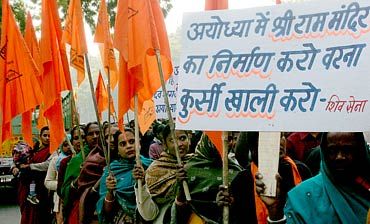
Thereafter, all was quiet until the night of December 22, 1949, when the idol of Lord Ram was placed in the mosque, following which hundreds of Hindus arrived and started offering prayers.
Even though the crowds were pushed back and the mosque's gates were padlocked, the deity remained inside.
Why was the idol not removed thereafter?
No one dared to move it, despite a directive to do so from then prime minister Jawaharlal Nehru to then Uttar Pradesh chief minister Gobind Ballabh Pant.
Then district magistrate K K K Nayyar expressed his inability to get the idol removed; he said he would prefer to be relieved of the charge rather than carry out the orders.
For some time, it seemed everyone was satisfied with the status quo and, by December 29, 1949, the additional city magistrate ordered attachment of the property. Then local municipal board chairman Priya Dutt Ram was appointed the receiver.
Then came the next round of legal battles...
On January 16, 1950, a suit was filed by a local resident, Gopal Singh Visharad, before Faizabad's civil judge, seeking permission to offer prayers inside the mosque where the deity of Lord Ram had been placed.
Civil judge N N Chadha passed an interim injunction, with the rider that the public could not be allowed to freely offer puja or receive darshan. But the local priest was allowed to perform the daily bhog.
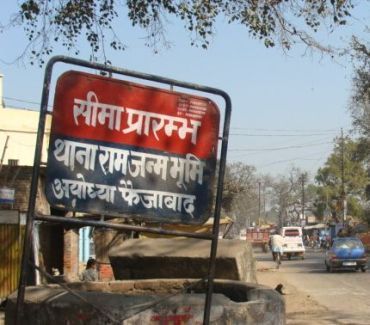
By 1964, the peripheral cases were settled and a date was fixed for the final hearing of this case.
To this end, a new receiver was appointed in 1968. However, his role became redundant as yet another appeal was filed before the Allahabad high court in 1971.
Following this, the Sunni Waqf Board and the Babri Masjid Action Committee moved the Allahabad high court against the district judge's order.

Meanwhile, all cases pertaining to the Ayodhya dispute were referred to the court's Lucknow bench.
The shilanyas in 1989 further aggravated the issue. The police firing ordered by then Uttar Pradesh chief minister Mulayam Singh Yadav's government on the kar sevaks in 1990 polarised Hindu votes in favour of the Bharatiya Janata Party and brought Kalyan Singh to power in 1991.
Kalyan Singh ordered the acquisition of 2.75 acres of land around the mosque in a bid to show his party's seriousness towards building the temple.
Babri Masjid Action Committee convener Zafaryab Jilani filed yet another writ petition to prevent any kind of construction on the acquired land.
Meanwhile, Delhi-based Aslam Bhure moved the Supreme Court against the acquisition of land.
But the apex court transferred the case to the Lucknow bench, with the directive that the status quo be maintained until the high court decided on the five writs that were, by then, pending there.
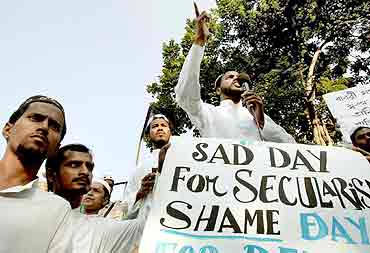
All hell broke loose on December 6, 1992 in Ayodhya, with violent Hindu mobs storming the 16th century mosque built by the first Mughal emperor Babur's army commander Mir Baqi.
Even as security personnel stood by that fateful day. the mosque was torn down by kar sevaks even as the top BJP leadership -- including L K Advani -- watched.
Advani later expressed sorrow at the demolition -- but it was clear to all that the forces unleashed by his rath yatra in favour of the temple in 1990 would be satisfied with nothing else.

Then chief minister Kalyan Singh had given the court an undertaking that the mosque would be protected. Kalyan Singh was later awarded a day's imprisonment.
His government had been dismissed hours after the demolition.
A few days after the demolition, the central government headed by then prime minister P V Narasimha Rao issued an ordinance acquiring 67 acres of land in and around the disputed site.
The Babri Masjid's demolition resulted in horrific riots across the country. Hundreds of people were murdered.
Mumbai and Surat were particularly affected by the violence, scarring thousands of people.
In 1994, the Supreme Court ordered the abatement of all pending suits and nullified all interim orders issued by various courts in the Ayodhya-related cases.
The Supreme Court ordered that the land remain in the central government's custody and the status quo be maintained until the Lucknow bench disposed of the writ petition.
This petition aimed to determine whether a Hindu temple had existed on the disputed site prior to the construction of the Babri Masjid and whether the mosque was built on the debris of a temple.
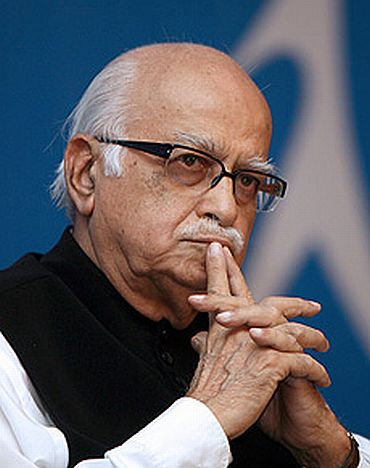
About Vajpayee, Advani and Dr Joshi, the Liberhan report said: 'These leaders have violated the trust of the people and have allowed their actions to be dictated not by the voters but by a small group of individuals who have used them to implement agendas unsanctioned by the will of the common person.
When is the verdict in the case due?
The special full bench of the Lucknow bench of the Allahabad high court, comprising Justice S U Khan, Justice Sudhir Agarwal and Justice Dharmveer Sharma, was slated to deliver the verdict at 3.30 pm on September 24.
However, the Supreme Court on September 23 put off by a week its hearing into a plea to defer the Ayodhya title verdict by the Lucknow bench of the Allahabad high court.
Supreme Court judge, Justice R V Raveendran, gave this order while hearing the petition filed by retired bureaucrat Ramesh Chand Tripathi to defer the title suit verdict.
In the petition filed through advocate Sunil Jain, Tripathi had cited several reasons for deferment of the verdict, which he said would be in "public interest" in view of the apprehension of communal flareup, upcoming Commonwealth Games, elections in Bihar and violence in Kashmir Valley and Naxal-hit states.
The Supreme Court on September 28 dropped Tripathi's plea and posted the date of the verdict in the case for September 30, 2010.
Also read: What to expect from the verdict